Surfing through a British winter can be a lot more fun and more comfortable than you might think. Modern wetsuits, combined with a safe, sheltered inland surf lake, mean you can surf right through the colder months and keep your fitness and form ready for spring and summer.
Here's why people keep coming back through winter, what to wear, what to look out for, and how to warm up once you're done.
Why surf in the cold
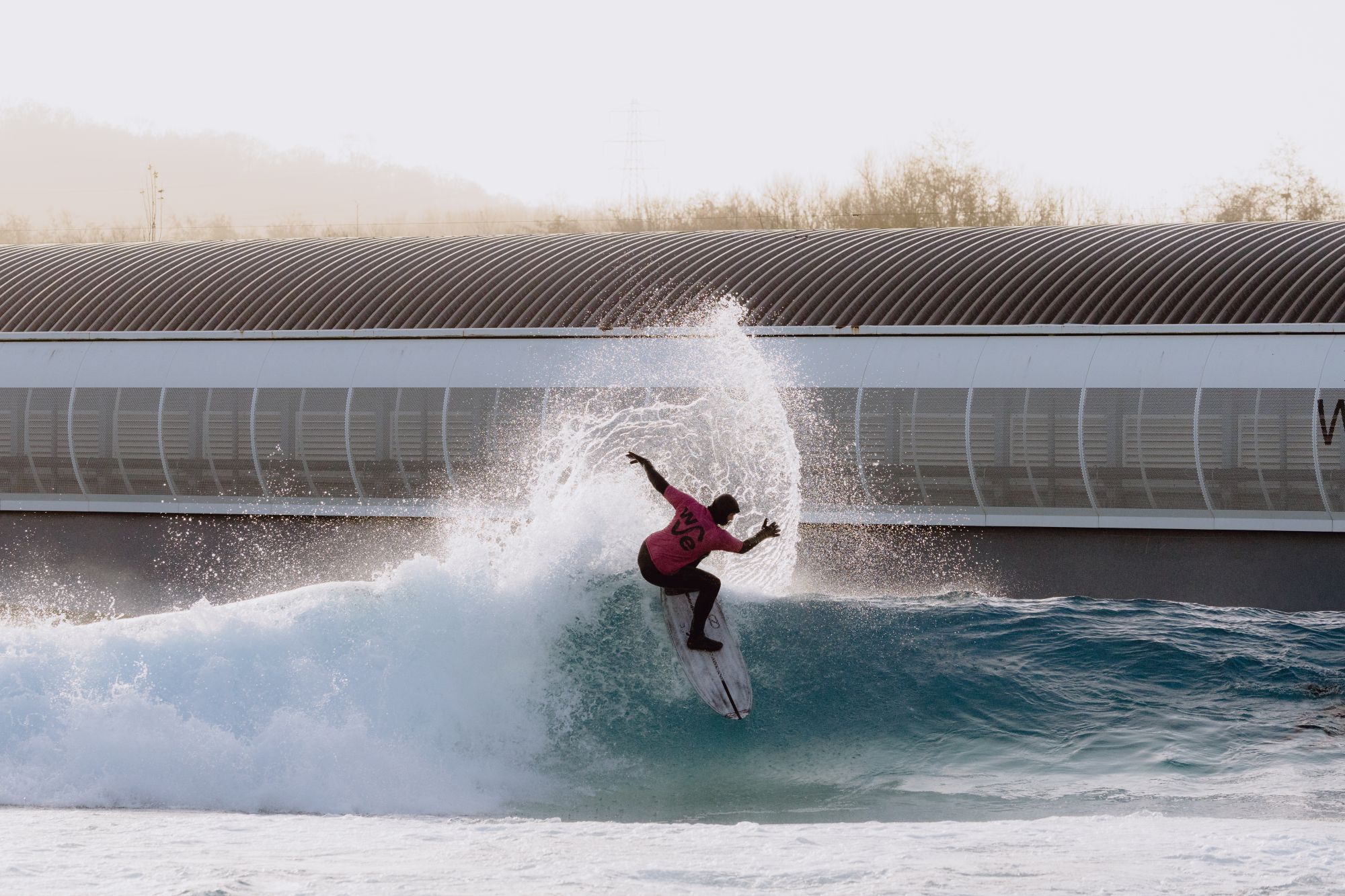
- The post-surf buzz. Cold water can trigger the release of dopamine, serotonin and b-endorphins.
- Staying in form. Surfing through winter keeps your paddle fitness and timing sharp.
- Surfable whatever the weather. When storms blow out the coast, the lake stays sheltered, controlled and lifeguarded.
- Kit included. Winter thick Rip Curl wetsuits, boots, gloves and hoods come free with your session.
- Something warm straight after. Hot food and drinks in the café, and a sauna you can book on site.
What to wear
The biggest change in winter surfing over the past couple of decades has been the evolution of the wetsuit. Modern winter suits are warmer, more flexible and better sealed than they used to be, and that's what makes year-round surfing in the UK much easier.
As a rough guide, based on water temp:
- 19°C and above, shorty, or a swimsuit or boardshorts
- 14-19°C: 3/2mm summer wetsuit
- 10-14°C: 4/3mm or 5/4mm wetsuit, boots and gloves optional
- 5-9°C: 5/4mm or 6/4mm wetsuit, thick boots, gloves and hood
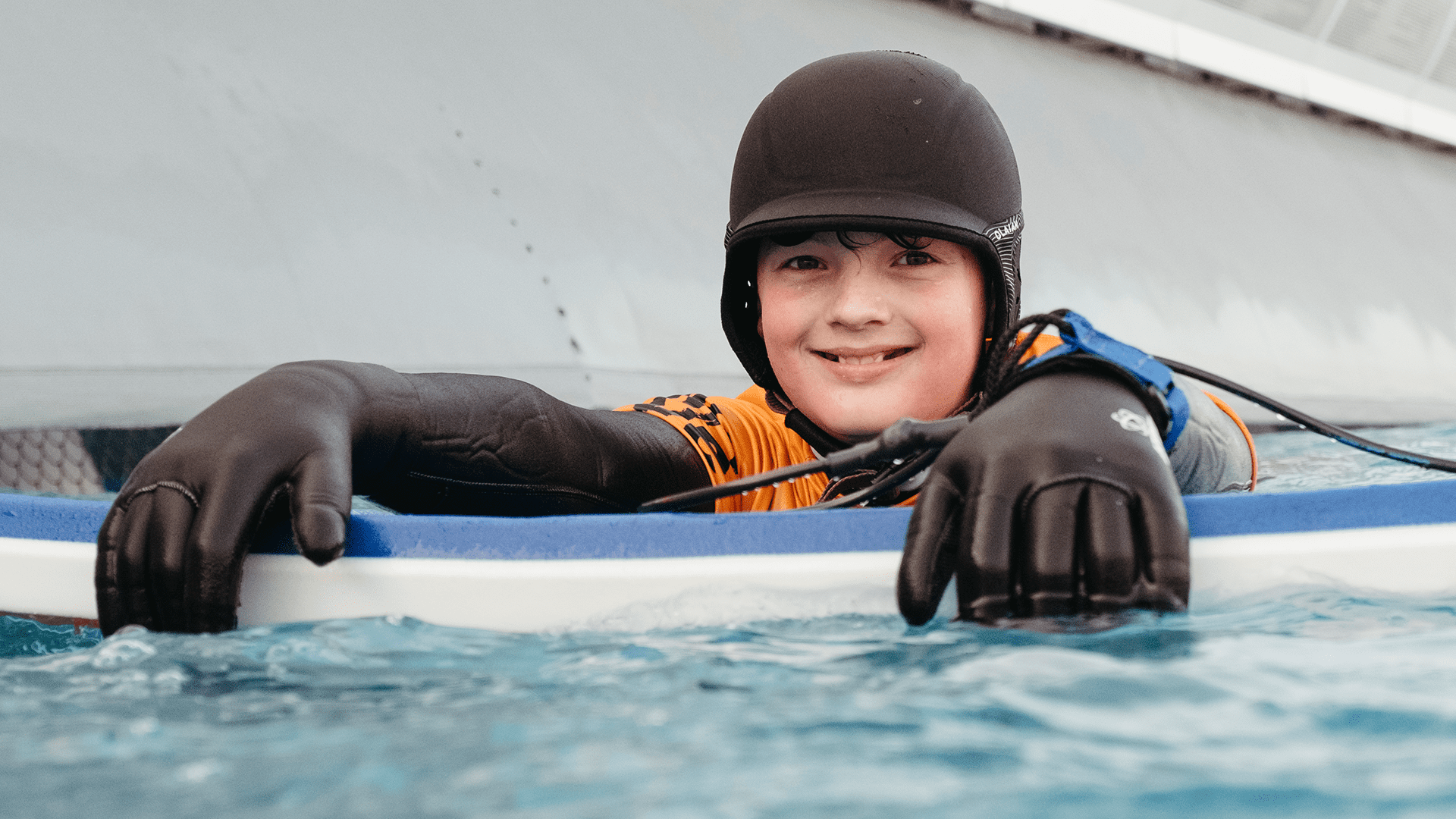
Through winter, winter-thickness Rip Curl wetsuits, boots, gloves and hoods are included free with your session, so you don't need your own kit.
What to look out for
Cold water is safe to surf in when you respect it.
Get out before you're cold. Paddling keeps you warm, but once you get tired, the cold sets in quickly. Shivering hard, numb hands, clumsiness or muddled thinking all mean it's time to come in.
A shorter session that ends well beats a long one that doesn't.
Warming up afterwards
Your core temperature can keep falling for 20 to 30 minutes after you get out, as cold blood from your hands and feet makes its way back to your core. It's known as afterdrop, and it's why warming up is less about getting hot quickly and more about getting dry, layered and moving.
- Layer up. A base layer, a warm mid-layer, a hat and thick socks.
- Have something warm. A hot drink and something to eat help your body generate its own heat.
- Keep moving. A short walk does more than sitting still.
- We have a sauna on site that you can book to round off your session, and the café has hot drinks and food looking out over the lake.
With the right kit and a bit of preparation, there's no reason winter has to be time out of the water.
‘There’s definitely a bit of a badge of honour about surfing in the winter. I get a real thrill from my winter sessions – plus there are less people in the water and quieter line-ups mean more waves! It’s exhilarating to be out there doing something that many people wouldn’t even consider – even if, the truth be told, it really isn’t cold or uncomfortable any more!’ George Stoy
